
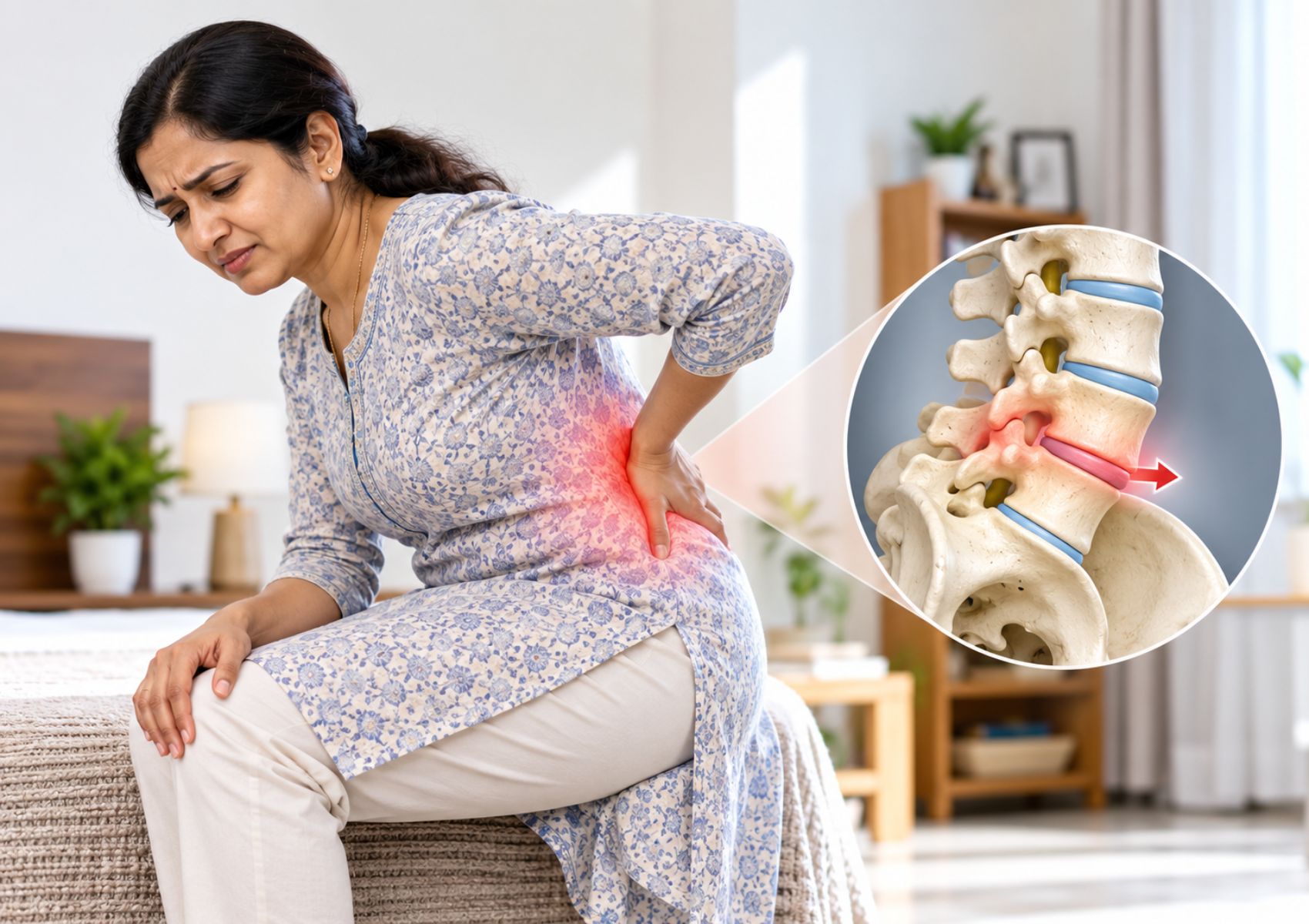
Persistent lower back pain that doesn't improve with rest, stretching, or painkillers may signal something beyond muscle strain. When pain continues and starts limiting your daily movement, it may point to a structural problem in the spine—one of the most commonly missed causes is spondylolisthesis, a condition in which a vertebra shifts out of its normal position.
If this matches what you're experiencing, it's a good idea to get evaluated. Spondylolisthesis Treatment in Varthur, Bangalore is available at Anytime Ortho Hospital, where the team can help identify the actual cause of your pain.
What Is Spondylolisthesis and How Does It Cause Lower Back Pain?
Think of your spine as a stack of small bones, called vertebrae, sitting neatly on top of each other. Spondylolisthesis happens when one of these bones slips forward or backward out of its normal spot, sliding over the bone right below it.
That slip changes how your spine lines up. It can squeeze nearby nerves, push against the discs that cushion your spine, and throw the whole structure slightly off balance. This is what turns into the ache, stiffness, or sudden sharp pain many people feel in their lower back. Since nerves from this part of the spine travel down to the legs, the pain sometimes shows up there too, not just in the back.
This slip can happen slowly with age, suddenly from an injury, gradually from repeated strain in certain sports, or in some people, it's something they were simply born with.
What Are the Symptoms of Spondylolisthesis in the Lower Back?
Not everyone feels it the same way, but here's what usually shows up:
- An ache that sits in the lower back and gets worse the longer you stand or walk
- Stiffness that makes bending or twisting uncomfortable
- Pain that travels into the buttocks or down one or both legs
- A tingling or numb feeling in the legs or feet
- Legs that feel weaker than usual, especially going up stairs
- Pain that calms down when sitting or leaning forward, but returns once you're active again
Notice a few of these together, especially if they've stuck around for weeks? That's usually your body telling you it's time for a proper spine check, not another home remedy.
Can Physiotherapy Help With Spondylolisthesis and Back Pain?
For most people, yes, and it's usually the first step before anyone even discusses surgery. A well-planned physiotherapy routine works on:
- Building strength in the muscles that support the slipped vertebra
- Loosening tight areas and improving how you move
- Correcting posture habits that quietly add pressure to your lower back
- Taking pressure off compressed nerves through targeted exercises
- Reducing how likely it is that surgery becomes necessary later
At Anytime Ortho Hospital, this plan isn't one-size-fits-all. It's built around how far the vertebra has slipped and how your body responds along the way. Many patients notice real improvement within a few weeks. In more advanced cases, additional support like bracing may be added, and surgery is only considered when nerves are seriously affected.
Getting the Right Diagnosis First
Since back pain has so many possible causes, treating it right starts with knowing exactly what's happening inside. At Anytime Ortho Hospital, that means a hands-on physical exam paired with imaging, usually an X-ray or MRI, so the exact position of the slipped bone and any nerve involvement can be seen clearly, not guessed at.
Conclusion
Ongoing back pain is not something to accept as normal — especially if it's lasted for weeks or continues to worsen. Getting it checked early can make all the difference in your recovery.
For reliable Spondylolisthesis Treatment in Varthur, Bangalore, Anytime Ortho Hospital offers expert care focused on genuine, long-term healing — not just temporary relief.
Book your consultation today and take the first real step toward a pain-free back.